Many Singapore families hire a confinement nanny for the first weeks after a baby is born: someone experienced who looks after the mother’s recovery and the newborn, cooks confinement food and helps everyone get some sleep. After that, many move on to a full-time domestic helper who can look after the baby long term.
This guide explains MOM’s rules for bringing in a confinement nanny, the alternatives, and how a confinement nanny compares to a helper.
What does a confinement nanny do?
Traditionally, a confinement nanny stays with the family for the confinement period, usually around the first month after birth. She typically:
- cares for the newborn day and night: feeding, bathing, burping, nappies and settling
- helps the mother recover: confinement meals, herbal drinks and rest
- teaches new parents baby-care basics
- does light housework related to the mother and baby
What exactly she does is agreed with her (or her agency) before she starts, so put it in writing.
Hiring a confinement nanny from Malaysia: MOM’s rules
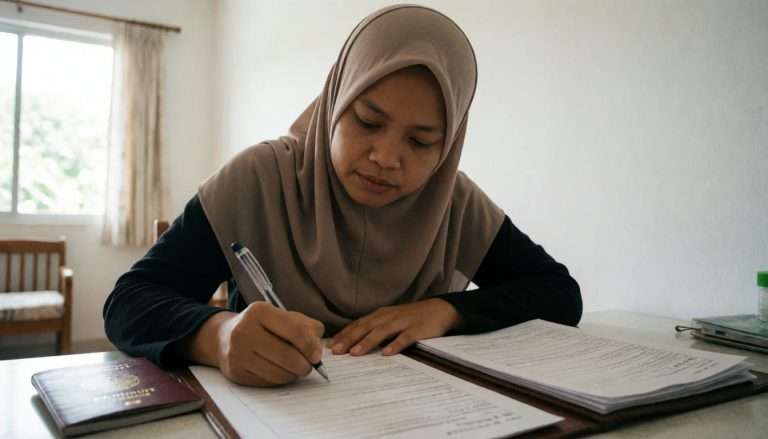
A foreign confinement nanny needs a Work Permit for Confinement Nanny from MOM. The key rules (MOM: key facts, eligibility):
- Malaysians only.
- She must be at least 23 and below 70 years old when you apply.
- The permit lasts up to 16 weeks from your baby’s date of birth and can’t be renewed. Applying after the birth leaves fewer weeks.
- Your baby must be under 4 months old.
- You (the employer) must be at least 21.
- She must live and work at your home, and can’t work for anyone else.
- Medical insurance of at least S$60,000 a year is required (for policies starting on or after 1 July 2023).
- A medical check-up is optional, though MOM suggests one since she’ll be close to your newborn.
- There’s no minimum salary; you agree it with her. Her salary is taxable.
You or an employment agency apply for the permit. If approved, you get an In-Principle Approval letter before she comes.
Levy for a confinement nanny
- S$60 a month if your baby is a Singapore Citizen
- S$300 a month if your baby is not a Singapore Citizen
If you also have a domestic helper, the two levies are combined into one monthly GIRO deduction. See maid levy rates and how to pay.
Hiring a local confinement nanny
Singaporean and PR confinement nannies don’t need a work permit or levy. Many work through confinement agencies and either live in for the month or come in by day. Ask about:
- how many weeks and whether she lives in
- what’s included: baby care, the mother’s meals, night feeds, housework
- her experience and references
- what happens if she falls ill or can’t continue
Confinement nanny vs domestic helper
A confinement nanny is best for the first weeks: she’s a newborn specialist, does night feeds and focuses on mother and baby. But it’s short term (up to 16 weeks for a Malaysian nanny) and usually doesn’t cover general housework.
A domestic helper is better for the long term:
- She works full-time for 2 years at a time and can be renewed.
- She can do childcare and housework: cooking, cleaning, laundry, school runs as the child grows.
- With a Singapore Citizen child under 16, the levy is S$60 instead of S$300 (MOM: levy concession).
- Many helpers have years of newborn and infant care experience.
Many families do both: a confinement nanny for the first weeks, with a helper starting before or soon after the nanny leaves, so the helper can learn the baby’s routine. The baby’s grandparents often fill the gap in between.
What about a part-time nanny?
Under MOM’s Household Services Scheme, basic child-minding is no longer supported from March 2026, and a domestic helper can’t work part-time for another family. See part-time maids in Singapore for what’s legal.
Finding a helper for your baby
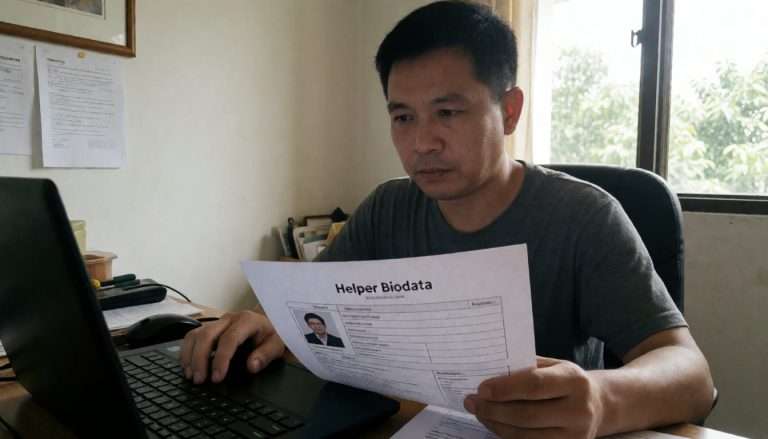
On EmployHelpers you can filter helpers by baby care and child care skills, years of experience and start date, read their work history and watch video introductions:
When you interview, ask about the youngest babies she has cared for, how she handles night feeds, bathing a newborn and safe sleep, and what she’d do if the baby had a fever. Our interview questions for helpers have more. Plan the timing: a helper from overseas takes longer to arrive than a transfer helper already in Singapore.
Frequently Asked Questions
Can I hire a confinement nanny from Malaysia?
Yes, with MOM’s Work Permit for Confinement Nanny. She must be Malaysian, aged 23 to below 70, and the permit lasts up to 16 weeks from your baby’s birth.
How much is the levy for a confinement nanny?
S$60 a month if your baby is a Singapore Citizen, or S$300 a month if not.
Can a confinement nanny’s work permit be extended?
No. It lasts up to 16 weeks from the baby’s birth and can’t be renewed.
Can I hire a confinement nanny from Indonesia or the Philippines?
Not under the confinement nanny work permit, which is for Malaysians only. A helper from Indonesia or the Philippines can be hired as a full-time domestic helper instead.
Can I have a confinement nanny and a helper at the same time?
Yes. Both levies are combined into one monthly GIRO deduction.
Is a confinement nanny or a helper better for a newborn?
A confinement nanny is a short-term newborn specialist for the first weeks. A helper with infant care experience is the long-term option and can also do housework. Many families use both.


 English
 Indonesian
 Myanmar
 Leonard Ng | Updated: November 18, 2026